Overseas exporters can’t hold Singapore’s SFA fresh fruits and vegetables import licence. Here’s the practical, step-by-step way Indonesian suppliers can work with a Singapore importer of record in 2026—requirements, timelines, costs, documents, and how to avoid delays.
If you’re shipping Indonesian vegetables into Singapore in 2026, here’s the simple truth most guides gloss over: only a Singapore-registered company can hold the SFA fresh fruits and vegetables import licence. Overseas exporters can’t apply. The fastest path is to set up a clean importer-of-record arrangement with a Singapore entity. In our experience, that’s what consistently cuts clearance time from days to hours.
The compliant pathway in one picture
- The importer of record (IOR) must be a Singapore-registered business with a UEN and local address. They hold the SFA fresh fruits and vegetables import licence and maintain an SFA GIRO account.
- Every shipment needs a TradeNet customs permit with the correct HS code. The IOR or their appointed declaring agent submits it.
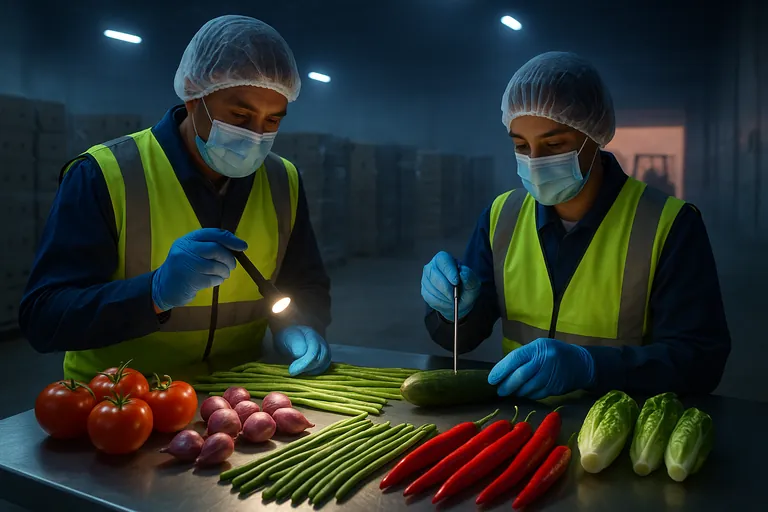
- Your consignment may be selected for SFA inspection or sampling. If it’s “held,” release happens after checks clear.
Takeaway: the IOR carries legal responsibility. If there’s a pesticide issue, lab cost and any re-export or disposal are on the IOR.
Who can hold the SFA licence, and who can’t?
Can an overseas company apply for Singapore’s SFA vegetable import licence?
No. Only Singapore-registered entities with a UEN can apply. That includes private limited companies, LLPs, and sole proprietors registered with ACRA.
If I’m an Indonesian exporter, do I need my own SFA licence or a Singapore partner’s?
You’ll need a Singapore partner’s licence. Your options are:
- Your buyer in Singapore holds the licence and acts as IOR.
- A specialist distributor or trading company holds the licence and becomes IOR.
- A logistics provider that explicitly offers IOR services for food. Some do, many don’t. They must hold the licence and accept liability to act as IOR.
We generally recommend the buyer or a dedicated distributor as IOR. They’re closest to the product and customers, and they have a direct stake in compliance.
The 3 pillars of fast, compliant imports
- Licence and GIRO readiness. The SFA “Fresh Fruits and Vegetables Import” licence plus an active SFA GIRO are non-negotiable. Without GIRO, SFA won’t activate the licence.
- Correct permits and classification. Declare the right HS code and quantities in TradeNet. Risk assignment and inspection triggers often ride on HS details.
- Clean documentation and cold-chain discipline. Match your permit data with invoice, packing list, and phytosanitary certificate. Temperature and handling matter because delays happen most when paperwork invites questions.
Weeks 1–2: Set up your importer-of-record (IOR) arrangement
- Confirm the IOR’s profile. They need a UEN, local address, and to be registered with Singapore Customs as a trader. If they don’t file permits in-house, appoint a declaring agent.
- Apply for the SFA fresh fruits and vegetables import licence. In parallel, submit the SFA GIRO form with a local bank. GIRO bank approval typically takes around 1–2 weeks, then SFA activates the licence. You can’t import while waiting.
- Agree on responsibilities in writing. Spell out who pays for permits, inspection, demurrage, lab tests, re-export/disposal if needed, and how to handle “held” shipments. Include service-level targets for permit filing and inspection booking.
Pro tip: Build a product matrix together. Leafy greens like Baby Romaine (Baby Romaine Lettuce) and Loloroso (Red Lettuce) are more frequently sampled for pesticide residues. Smooth-running lines like Japanese Cucumber (Kyuri) and Tomatoes help you stabilize the lane while you fine-tune testing protocols for higher-risk SKUs.
Need help structuring your IOR and compliance playbook for Indonesian vegetables? Contact us on whatsapp.
Weeks 3–6: First shipments, permits, and documents that actually clear
Here’s the exact document set we align before uplift from Indonesia:
- Commercial invoice and packing list with product names matching the permit.
- Transport document. Air waybill or bill of lading.
- Phytosanitary certificate. Issued by Indonesia’s quarantine authority (Barantan) for fresh vegetables. Make sure scientific names and quantities align with the permit.
- Country of origin statement. Usually embedded in the invoice is fine.
- Any pre-export lab tests. Not mandatory, but smart for higher-risk items like Red Cayenne Pepper (Fresh Red Cayenne Chili) or leafy greens, to reduce surprise holds.
Permit specifics that save days:
- HS codes under Chapter 07. Examples: 0702 tomatoes, 0707 cucumbers and gherkins, 0703 onions, 0705 lettuce and chicory. Use the correct 8 or 10-digit code per Singapore’s tariff. Wrong HS codes are a top reason for holds.
- Net weight, packages, and description must mirror the invoice and phyto. Even a unit-of-measure mismatch can trigger questions.
- Permit conditions. If the permit says “detained for inspection,” plan for routing to the designated inspection point before delivery.
Weeks 7–12: Scale without surprises
Once the lane runs, we focus on predictability.
- Sampling and pesticide residue testing. SFA conducts routine surveillance. Recently we’ve seen sustained focus on leafy greens and chillies. If selected, allow 1–3 working days for lab results. Fails lead to rejection or disposal, and increased surveillance on future lots.
- Build a preventive testing rhythm. For high-risk SKUs, periodic pre-export COAs that align with SFA’s MRLs reduce hold risk. It’s not a guarantee, but it’s a strong signal you control your upstream.
- Tighten timing buffers. File permits early, share pre-alerts 24 hours before arrival, and align morning delivery windows so inspection doesn’t spill into next day.
Common questions we get (and straight answers)
How long does SFA approval take and can I import while waiting?
Once the GIRO is approved by the bank and acknowledged by SFA, licence activation is usually quick. End-to-end, plan 1–2 weeks. You can’t import until the licence is active and linked to GIRO.
Can a logistics forwarder act as importer of record for vegetables?
Legally yes, if they’re Singapore-registered, hold the SFA licence, and accept liability. Practically, many forwarders won’t. Confirm in writing before you ship.
Do Indonesian vegetables need a phytosanitary certificate for Singapore?
Fresh vegetables generally require a phytosanitary certificate issued by Indonesia’s NPPO. It must match the shipment details and commodity descriptions. Your IOR should verify current SFA requirements for your HS codes before uplift.
What’s the difference between the SFA licence and the Customs/TradeNet permit?
The SFA licence authorizes the company to import fresh fruits and vegetables. The TradeNet permit authorizes each consignment’s entry with exact HS codes, quantities, and conditions. You need both.
What documents are needed to import Indonesian chilli into Singapore?
For fresh chilli: commercial invoice, packing list, AWB/BL, phytosanitary certificate, and the TradeNet permit referencing the SFA licence. We recommend pre-export pesticide testing for chillies due to higher surveillance.
How do I check SFA hold or release status for shipments?
Your permit will state if the consignment is detained for inspection. The IOR or declaring agent can also see status updates in their trade systems and will receive SFA notifications. If held, follow the inspection booking instructions and provide samples when requested.
The five mistakes that cause most delays (and how to avoid them)
- Assuming an overseas exporter can hold the SFA licence. You can’t. Appoint a Singapore IOR early.
- Skipping GIRO setup. Without an active SFA GIRO, your licence won’t activate.
- HS code errors. Misclassification can trigger holds. Align HS codes with the product list and invoice before permit filing.
- Sloppy document matching. Product names, net weights, packages, and botanical names must align across the invoice, phyto, and permit.
- Ignoring sampling risk. For leafy greens and chillies, plan for occasional holds. Add pre-export COAs and schedule buffers.
Costs and responsibilities in practice
- SFA licence fee. Modest annual fee payable via GIRO. Your IOR can confirm the current SFA schedule.
- TradeNet permit fees. Small per-permit charges plus your declarant’s service fee.
- Inspection and testing. If your lot is sampled, lab fees may apply. If it fails, the IOR is responsible for re-export or destruction costs.
- GST on CIF value. The IOR pays GST at import unless you structure the sale otherwise.
Structure this in your commercial terms. Decide who bears which costs for holds or failures before your first shipment.
When this advice applies (and when it doesn’t)
- Applies to fresh vegetables under Chapter 07 HS codes. Also relevant to fresh fruits under Chapter 08 where similar SFA licence rules apply.
- Doesn’t apply to processed or frozen vegetables that may follow different licence categories. If you’re moving IQF vegetables or value-added packs, confirm if the same licence covers your SKUs.
For buyers who need consistent supply, our export-ready range is already aligned to Singapore requirements, including steady lines like Tomatoes, Japanese Cucumber (Kyuri), and targeted items like Red Cayenne Pepper (Fresh Red Cayenne Chili). If you’re building a Singapore program, you can also View our products to plan your initial assortment.
Bottom line
Overseas companies can’t hold Singapore’s SFA fresh fruits and vegetables import licence. The fastest, cleanest route is to partner with a Singapore IOR who has a UEN, SFA licence, and GIRO in place. Align HS codes, documentation, and a realistic sampling plan, and your Indonesian vegetables will move smoothly. We’ve found that when you lock these fundamentals, the rest is operations—not firefighting.